Habitikami: an AI-assisted companion for habits, temptations, and CBT/ACT
Hi everyone!
I want to share something I’ve been quietly working on: Habitikami — a small app with a big goal.
Habitikami is a companion for building habits, navigating temptations, and practicing evidence-based psychological techniques (Cognitive Behavioral Therapy and Acceptance and Commitment Therapy), with an AI assistant gently guiding you through the process.
Why I built it
Most habit-tracking apps are checklists with streaks. They tell you what you didn’t do, but rarely help you understand why, or what to do when the urge hits at 11pm and willpower runs out.
The apps that go deeper — therapy and journaling tools — are often expensive, locked behind subscriptions, or feel clinical in a way that’s hard to use daily.
I wanted something that:
- Lives in your browser and on your phone. No friction, no install required.
- Treats temptations as data, not failures.
- Borrows from real psychology — CBT for the thoughts that drive behavior, ACT for the values that pull you forward.
- Uses AI as a coach, not a replacement for therapy — to reflect, reframe, and remind.
- Is fully open source, so you can see exactly what it does with your data.
That’s Habitikami.
What it does
Habit tracking that respects context
Track the habits you’re building (and the ones you’re breaking). But instead of just streaks, Habitikami captures context: time of day, mood, triggers, what you did instead. Over time you stop seeing “I failed Tuesday” and start seeing patterns you can actually act on.
Temptation logging
Felt the urge but didn’t act on it? That’s a win, and it gets recorded. This is the part most apps miss: noticing a temptation and choosing differently is the work. Habitikami treats it as a first-class event, not invisible labor.
AI-guided CBT and ACT exercises
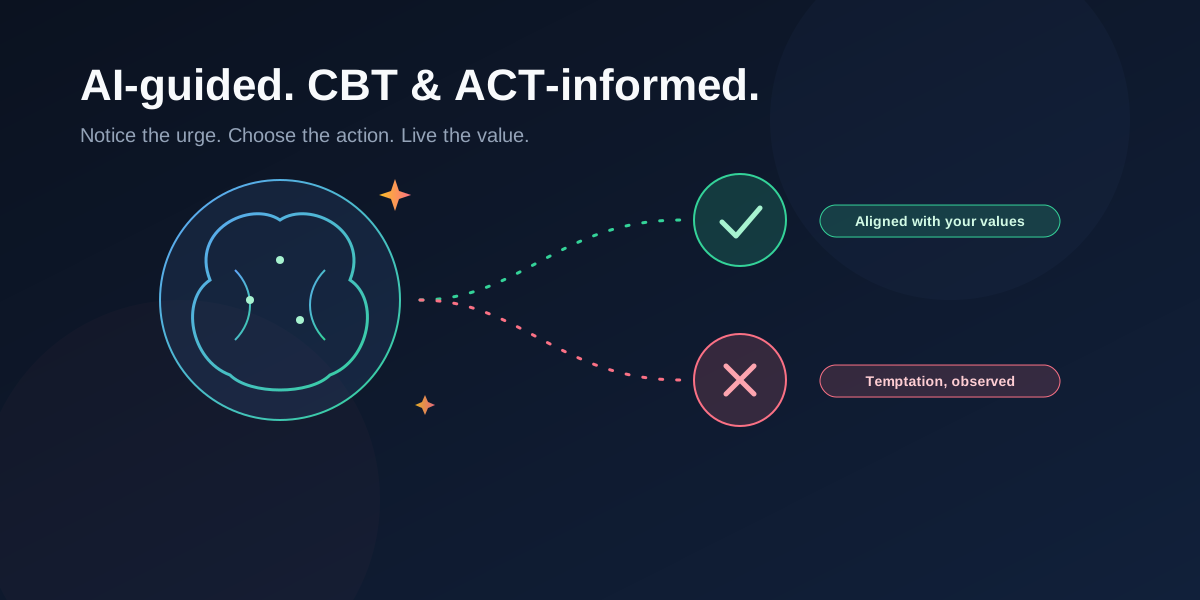
This is the heart of the app. Two complementary frameworks, both backed by decades of clinical research:
- CBT (Cognitive Behavioral Therapy) focuses on the thoughts that drive feelings and behaviors. The AI walks you through identifying cognitive distortions, examining evidence, and reframing — the kind of structured exercise a therapist would guide you through, available whenever you need it.
- ACT (Acceptance and Commitment Therapy) focuses on accepting difficult thoughts and feelings while committing to actions aligned with your values. Habitikami helps you name your values, notice when you’re moving toward or away from them, and use “urge surfing” instead of fighting cravings head-on.
The AI doesn’t pretend to be a therapist. It plays the role of a patient, knowledgeable companion — one that remembers what you said last week and gently helps you connect the dots.
A real journal, not just stats
Daily reflections, mood check-ins, and free-form journaling — all searchable, all yours. The AI can summarize patterns across weeks if you want it to, or stay completely out of the way.
Where to find it
- Web app (desktop and mobile): habitikami.kambei.dev — works offline as a PWA, install it to your phone or desktop with one tap.
- Android APK + source code: github.com/kambei/habitikami — fully open source. Clone it, audit it, modify it, self-host it.
A note on intent
Habitikami is not a replacement for professional mental health care. If you’re dealing with serious anxiety, depression, addiction, or any condition that needs clinical support, please talk to a therapist or doctor. CBT and ACT work best with a trained guide.
What Habitikami is: a tool for the in-between moments — the daily nudges, the 11pm urges, the small wins nobody else sees. The stuff between therapy sessions, or for people who don’t have access to therapy at all but still want evidence-based techniques in their pocket.
That’s the goal: lower the barrier to better habits, not raise expectations no one can meet.
Why open source
Mental health and behavior change are deeply personal, and the data involved is some of the most sensitive there is. You should be able to see exactly what an app like this does.
By keeping Habitikami fully open source under github.com/kambei/habitikami:
- You can verify the data handling yourself.
- You can run it locally or self-host it if you want full control.
- The community can contribute exercises, translations, and improvements.
- The methodologies stay transparent — CBT and ACT prompts aren’t a black box.
What’s next
There’s a lot I want to add: more guided exercises, deeper integration with the journaling side, optional sync, and better support for habit stacking (the underrated technique of attaching new habits to existing ones).
If Habitikami helps even a handful of people notice an urge, reframe a thought, or commit to one value-aligned action they would have skipped — it’s done its job.
Try it at habitikami.kambei.dev, browse the code at github.com/kambei/habitikami, and if you have ideas or feedback, open an issue. I’d love to hear from you.
See you next time!